Tools to Turn Competitor Insight Into Ready-To-Launch Ads
You don’t just want to spy on competitors; you want to turn their best ads into your next winners. With the right tools, you can track their hooks, CTAs, and landing pages, then translate those insights into testable concepts in a single workday. The challenge is knowing which platforms give you signal instead of noise and how to connect the dots from raw creative to your own launch-ready campaigns…
Turn Competitor Insights Into Ads
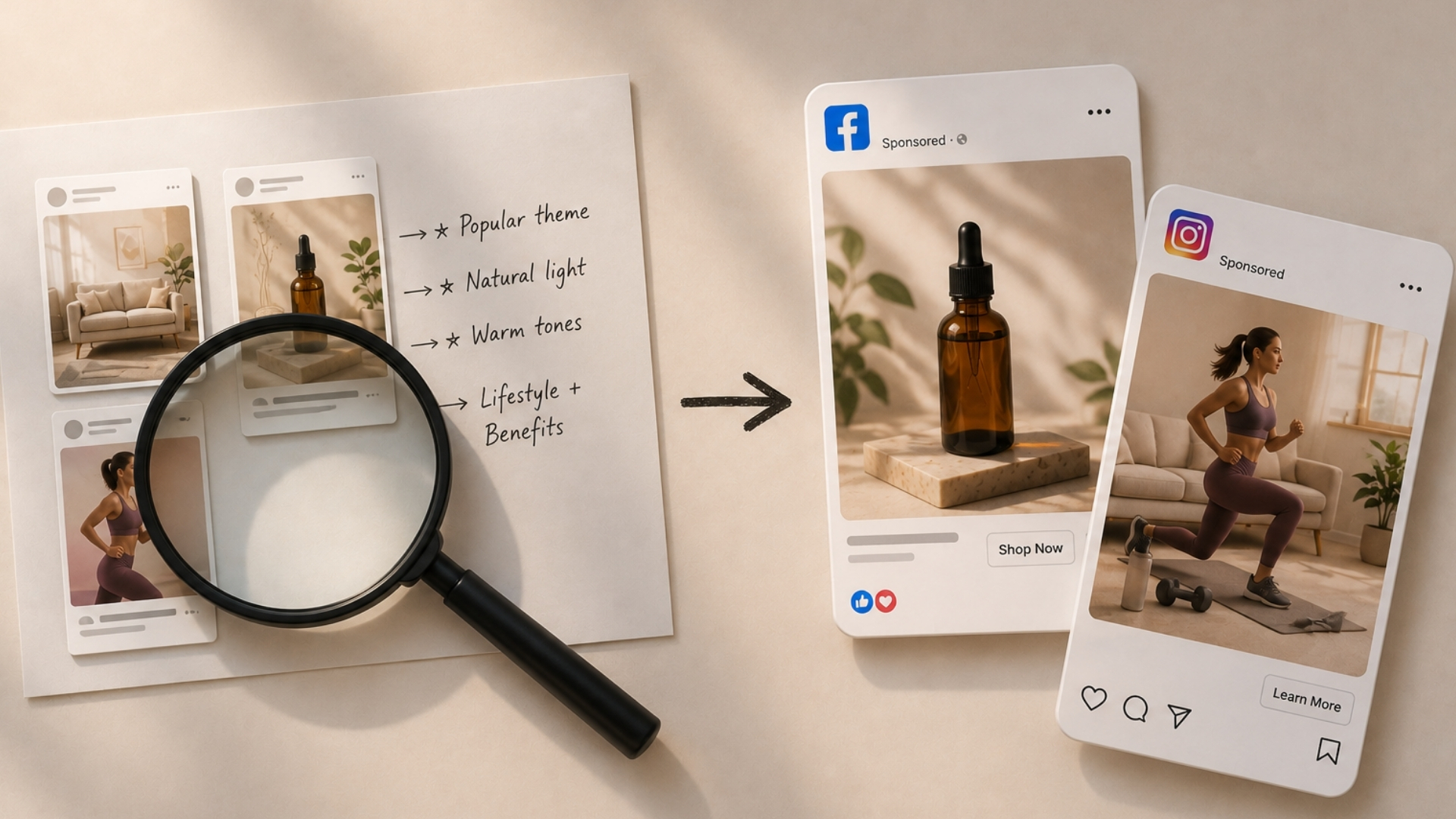
Use competitor data to develop ads based on observable patterns rather than assumptions. Start by pulling active Facebook and Instagram creatives from Meta’s Ad Library. Classify each ad by elements such as hook, call to action, visual style, and format.
Use indicators like run duration and frequency of re-use as approximate signals of performance, while acknowledging they aren't definitive metrics.
Analyze recurring layouts, types of proof (such as testimonials, statistics, or demonstrations), and message structures. Use these insights to create original variants that maintain similar strategic elements without replicating competitors’ content.
Review this data regularly for example, weekly to identify changes in creative direction, such as increased use of video, different hooks, or new formats.
Finally, compare ad messaging with the associated landing pages and on-site user experience. Align your own ad angles, offers, and page structure so that users encounter consistent positioning from initial impression through to the conversion process.
Pick the Right Competitor Insight Tools
Once you’re ready to turn competitor research into live ads, the tools you select should make it straightforward to identify effective patterns and convert them into actionable briefs. Focus on platforms with extensive Facebook ad library coverage (ideally 100M+ ads), robust filtering options (e.g., country, language, format, engagement, duration, landing-page structures), and at least two years of historical data. This level of depth supports more reliable trend analysis and reduces the risk of basing decisions on short-term anomalies.
Meta-native tools such as Atria can be useful because they connect competitor activity with your own performance data, benchmarked against larger spend levels, and can streamline the process of turning insights into structured concepts for testing. For brands operating across multiple channels, multi-network databases or enterprise platforms like Brandwatch can provide broader coverage by combining social listening, ad intelligence, and collaboration features such as tagging and shared workspaces.
Settle your budget before you build the shortlist, because the spread between tiers in this category is wide and the free end covers more than most people expect. GetHookd's rundown of the best ads spy tools in 2026 compares what you actually get without paying against what the subscription platforms add, and it is honest about the central limitation of the free libraries: they show you which ads are running, not which are working. Worth reading before you commit to an annual contract on the strength of a demo.
Facebook Ad Spy Tools for Competitor Creatives
With the right tools, you can move from general awareness of competitor activity to a more detailed view of the ads they run in the feed.
Begin with Meta’s Facebook Ad Library to review all currently active Facebook and Instagram creatives from your competitors.
Classify each ad by elements such as hook, format, call to action, visual style, and approximate performance indicators, such as whether the ad has been running for at least three weeks, which can serve as a basic proxy for effectiveness.
For broader and more granular analysis, platforms like AdSpy allow you to apply keyword searches and engagement-based filters across a large archive of historical ads (over 200 million).
BigSpy offers similar capabilities across multiple ad networks, enabling comparison of creative approaches across channels.
Tools like Atria’s Raya can then translate these competitor insights into structured concept frameworks and ad variants that can be used as inputs for your own creative briefs and testing roadmaps.
Tools for Competitors’ Traffic, Keywords, and Audiences
Although creative analysis reveals what competitors say in their ads, you also need to understand where their traffic comes from, which keywords they purchase, and which audiences they focus on.
SEMrush’s Advertising Research provides daily updated estimates of paid traffic, cost-per-click (CPC) ranges, position history, and keyword gaps across different markets, helping you identify where competitors are concentrating spend and where opportunities may exist.
SpyFu maintains a historical archive of keywords that competitors have bid on, which can indicate past testing activity, shifts in budget allocation, and terms that appear to perform consistently over time.
Similarweb can be used to estimate Google Ads traffic shares and observe keyword-level trends, giving additional context on how much paid search contributes to a site’s overall traffic.
Ahrefs helps connect paid keywords to the specific landing pages they drive traffic to, allowing you to examine how competitors structure their campaigns and on-site messaging.
Finally, platforms such as ZoomInfo can translate these insights into concrete audience segments by providing firmographic and contact data, enabling more targeted outreach based on the profiles that competitors appear to prioritize.
Social Listening Tools for Competitor Angles
Beyond click and keyword data, social listening tools can help identify the messaging angles competitors use before those themes appear in paid ads. With Brandwatch’s Iris AI, teams can analyze data from over 100 million sources and organize competitor themes, hooks, and narratives into structured creative directions that can be referenced across campaigns.
Using BrandwatchGPT, high-volume social and online conversations can be summarized into AI-generated KPIs, helping clarify which angles such as urgency, social proof, or pain-versus-outcome framing show stronger signs of engagement and relevance.
Contify can then be used to aggregate and filter competitor and market intelligence from over 1 million sources, reducing noise and highlighting consistent patterns in positioning. Panoramata can complement this by mapping identified messaging angles to specific ad formats, creative executions, and refresh cycles, providing a more direct link between observed narratives and how they appear in live advertising before new variants are briefed.
Battlecard Tools That Turn Competitor Claims Into Ads
Instead of using competitor battlecards as static sales collateral, teams can now apply specialized tools to convert live competitor claims into structured advertising concepts. With Atria, for example, sales and marketing teams can break down competitor activity into specific elements such as hooks, formats, calls to action, visual styles, and refresh cadence and translate these into repeatable concept frameworks.
Atria’s Raya feature further organizes data from sources like the Meta Ad Library into structured ad ideas that are aligned with observed market behavior.
This approach allows teams to pair documented competitor evidence with tagged attributes (e.g., proof type, offer structure, audience pain points, or desired outcomes). As a result, they can systematically mirror patterns that are performing well in the market, rather than directly copying creative executions.
Atria’s benchmarks, based on over $9B in ad spend, provide additional validation for which angles and formats are most likely to be effective.
Other tools support adjacent parts of this workflow. Crayon captures and routes evolving B2B competitor claims into revenue-focused workflows, helping go-to-market teams keep messaging and positioning current.
AlphaSense enables users to surface precise claim language from a wide range of documents and disclosures, giving more granular insight into how competitors describe their products, value propositions, and differentiation.
Taken together, these tools allow organizations to move from static battlecards to a more evidence-based, iterative process for developing ad concepts and messaging.
AI Tools That Turn Competitor Ads Into Concepts
Traditional static screenshots of competitor ads provide only a limited view of what might be effective. Newer AI-based ad intelligence tools are designed to surface the underlying creative and strategic concepts that can be tested directly.
Atria’s Raya (planned for early 2025) combines Meta Ad Library data, benchmarks from more than $9 billion in ad spend, and a brand’s own performance history to suggest Meta-specific creative concepts. This approach aims to align recommendations with both market-level patterns and account-level results.
AdSpy enables users to search more than 201 million Facebook and Instagram ads with engagement-based filters, which can help identify messages, angles, and formats that have demonstrated measurable interaction.
AdFlex extends this functionality with keyword-level search, broader non-English coverage, and landing page capture, allowing marketers to analyze not just ad creatives but also downstream hooks, offers, and messaging continuity.
BigSpy focuses on cross-platform analysis to identify recurring creative patterns across multiple ad networks.
Brandwatch uses Iris AI and BrandwatchGPT to connect ad concepts with real social media conversations, helping ground creative ideas in observed audience discussions and sentiment rather than relying solely on ad performance metrics.
A One-Day Workflow From Competitor Insight to Launch
Once you have identified relevant competitor concepts, you can convert them into launch-ready ads within a single working day by following a structured process.
Begin by collecting 50-200 active creatives from the Meta Ad Library, capturing key details such as start dates, formats, and copy.
Classify each ad across five dimensions: hook type, visual style, call to action, format mix, and run duration (using 3+ weeks as a proxy for stronger performance, while recognizing this is an imperfect indicator).
Use recurring patterns across these dimensions to build an “original-but-structured” concept map that reflects what appears to be working in the market without directly replicating competitor work.
From this map, develop 6-12 creative variants, changing only one element at a time to isolate impact.
Package these into a Meta-ready creative set and launch them in a controlled test, aiming to gather initial performance data (e.g., click-through rate, cost per result, thumb-stop rate) within the first 24 hours, while acknowledging that more time and spend will be required for statistically reliable conclusions.
Conclusion
Now you’ve got a full stack of tools to turn competitor insight into ready-to-launch ads fast. Use spy tools to swipe winning hooks, traffic tools to validate intent, and social listening to surface angles your market already cares about. Then turn everything into battlecards and AI-powered concepts you can test the same day. If you keep this loop running, you won’t just follow competitors you’ll beat them to the next winning message.